




Setup
Projector Screen vs White Wall: When a Screen Is Worth Buying
A smooth matte wall works in a dark room, while a screen helps with textured walls, room light, and portability. Compare them before you buy.

On this page
A smooth, matte white wall is enough for a dark room, and costs nothing. A screen is worth buying when your wall is textured, colored, or glossy, when the room has some light, or when you want a portable setup you can use anywhere. Screen size is chosen by distance, so you can pick either one.
Do you need a projector screen at all?
No. A projector shines on any light surface. A flat, matte white wall in a dark room can look nearly as good as a screen, especially at moderate picture sizes.
Where a screen helps is consistency. It gives you a smooth, even, correctly colored surface wherever you put it. A wall gives you whatever your wall happens to be.
Screen vs wall: how do they compare?
| Factor | Screen | White wall |
|---|---|---|
| Cost | You pay for it | Free, or a can of paint |
| Surface smoothness | Smooth and even | Depends on the wall, and texture shows on large pictures |
| Color accuracy | Neutral white | Depends on paint color and age |
| Contrast and brightness | Designed to reflect light well, with some types suited to room light | Fine in the dark, weaker with room light |
| Portability | Portable models move with you | Fixed to one room |
| Setup | Needs a stand, frame, or hooks | None |

What happens when the room is not dark?
Any ambient light lowers contrast, whether the picture lands on a wall or a screen. Black looks gray, and colors fade. No projector in this class beats daylight, and no screen fixes that.
Some specialist screens, called ambient-light-rejecting (ALR) screens, are built to reflect light from the projector and reduce light from other directions. They help in lit rooms, but they work best with a projector placed in a specific spot, and they have viewing-angle limits. For most homes, the better fix is simple: draw the curtains.
The screen material also has a gain number. Gain of 1.0 is a neutral reference. Higher gain makes the picture look brighter but narrows the angle from which it looks good. If you sit off to the side, a neutral screen is usually the safer choice.
A quick test before you buy
Project a white image on your wall in the evening, with the lights you normally use. Stand where you will sit and look at the surface from there. If you can see a texture, a stain, or a color tint, a screen will look cleaner. If the wall looks even, you can save the money and spend it on curtains or a speaker instead.
How do you prepare a wall for projection?
If you go with a wall, you can improve it a lot with a little work.
- Choose a flat, matte surface. Gloss and semi-gloss paint reflect hotspots and glare.
- Avoid texture. Orange peel, stucco, or brick show up as fine shadows, especially on pictures above 100 inches.
- Pick a neutral color. Bright white or a very light gray keeps colors accurate. Beige and tinted walls shift the picture.
- Clear the space. Remove art, shelves, and switches that fall within the picture.
Special projector paint exists, but a clean matte white or light gray paint is a reasonable first step.
What about portable projector screens?
A portable screen lets you use the same picture in the living room, in the bedroom, or outdoors. It also solves the problem of a wall that is textured or the wrong color.
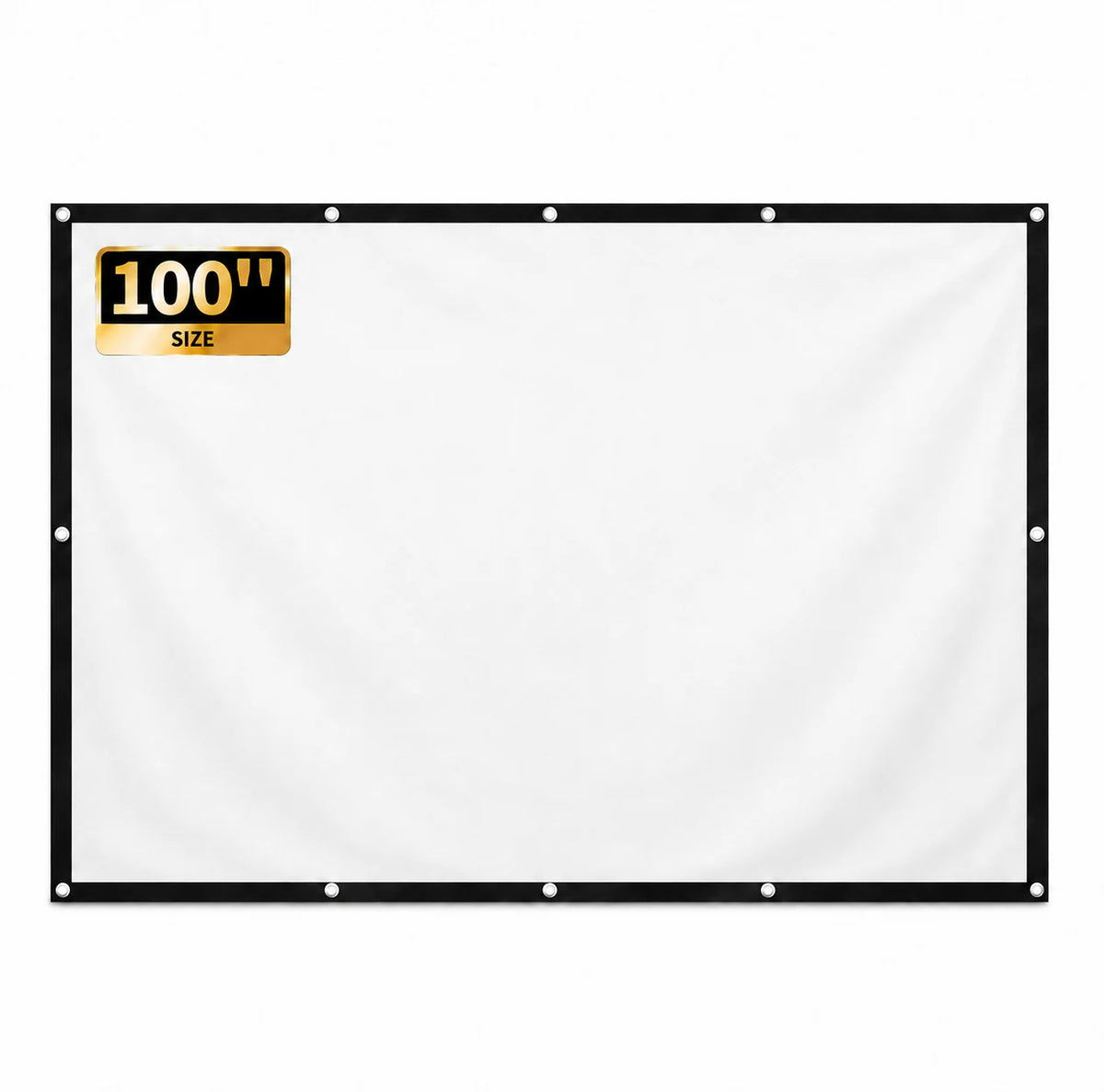
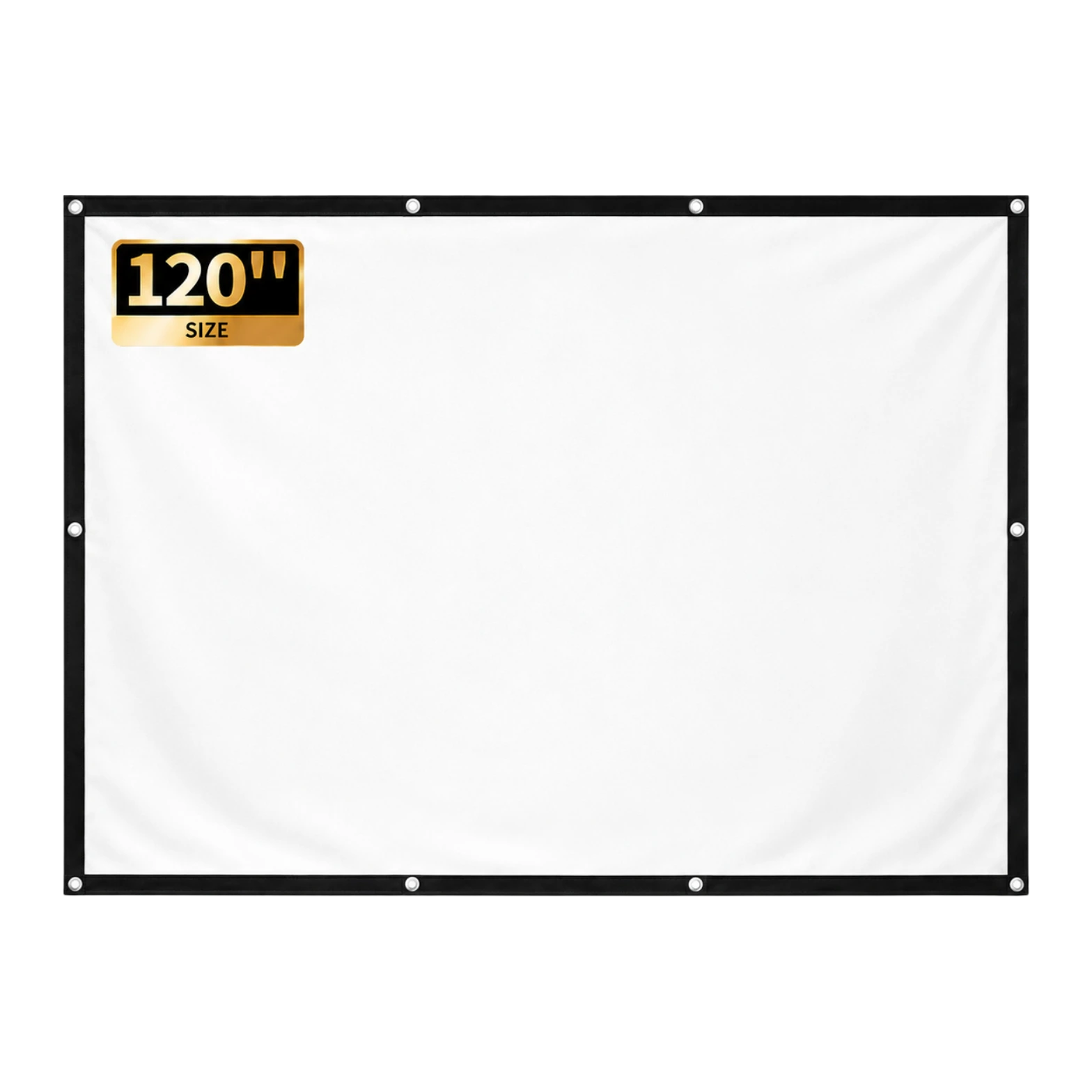
Zoomly offers a 100" portable projection screen and a 120" portable projection screen. Pick the size by distance. With the Pro Max, a 100" picture needs about 9.1 ft (2.77 m) and a 120" picture needs about 10.9 ft (3.32 m). With the Pro Elite, the official distances are 9.5 ft (2.9 m) and about 11.5 ft (3.5 m).
The projector distance guide explains how to calculate the right distance for any size.
Which should you choose for your room?
- Dark bedroom, smooth wall: use the wall. See the bedroom setup guide.
- Living room with some light: a screen helps, together with curtains.
- Textured wall or colored paint: choose a screen, or repaint a section.
- Moving between rooms or going outside: choose a portable screen.
- Large picture of 100" or more: check for wall texture first. A screen is often the safer option.
Frequently asked questions
What wall color is best for a projector?
A flat, matte white or a very light gray. Avoid gloss, texture, and tinted colors, since they affect brightness and color accuracy.
Is paint enough?
For a dark room, a clean, smooth, matte paint can be enough. If the wall is textured, painting does not remove the texture, so a screen may still look better.
Does a 4K projector need a special screen?
No. It needs a smooth, flat, white surface. Texture hides fine detail, so a smooth screen shows more of what a 4K projector can do.
What does screen gain mean?
Gain compares how much light the screen reflects with a neutral reference of 1.0. Higher gain looks brighter from the front but narrows the good viewing angle.
Can I use a projector outdoors?
Yes, after dark and with a portable screen. Choose a spot out of the wind and with no lights shining on the screen.
Ready for a bigger picture?
Draagbaar Projectiescherm 100 inch
Products in this guide
Keep reading

How Far Should a Projector Be From the Screen? Throw Distance Chart
Find the right projector distance for any picture size, with the formula, a worked example, and official distance charts for the Pro Elit...

Projector for a Bedroom: Size, Brightness, Ceiling and Noise
A bedroom is a good place for a projector because you can make it dark. Pick the picture size from your distance, then place the projecto...

What Is Auto Keystone? How It Fixes a Slanted Projector Image
Auto keystone straightens a slanted projector image automatically. Here is how it works, what it costs in sharpness, and how to need less...